Job postings can sometimes read like an alien language. As we search for new roles as a Production Operator or Maintenance Tech, we sometimes feel as if we’re reading ancient Sanskrit, Greek, or hieroglyphics. Why must we wade through an acronym soup of PPE (personal protective equipment), OT, SD, and OSHA just to apply for a new hourly role? What does it all mean?
At matchAmint, we’d like to help you not only find a new role with clear pay and transparent requirements, but to also help you also understand common terms that every worker should know before applying. Let’s start with one that you’ve probably seen all the time: PPE.
What Is Personal Protective Equipment?
In short, PPE stands for Personal Protective Equipment.
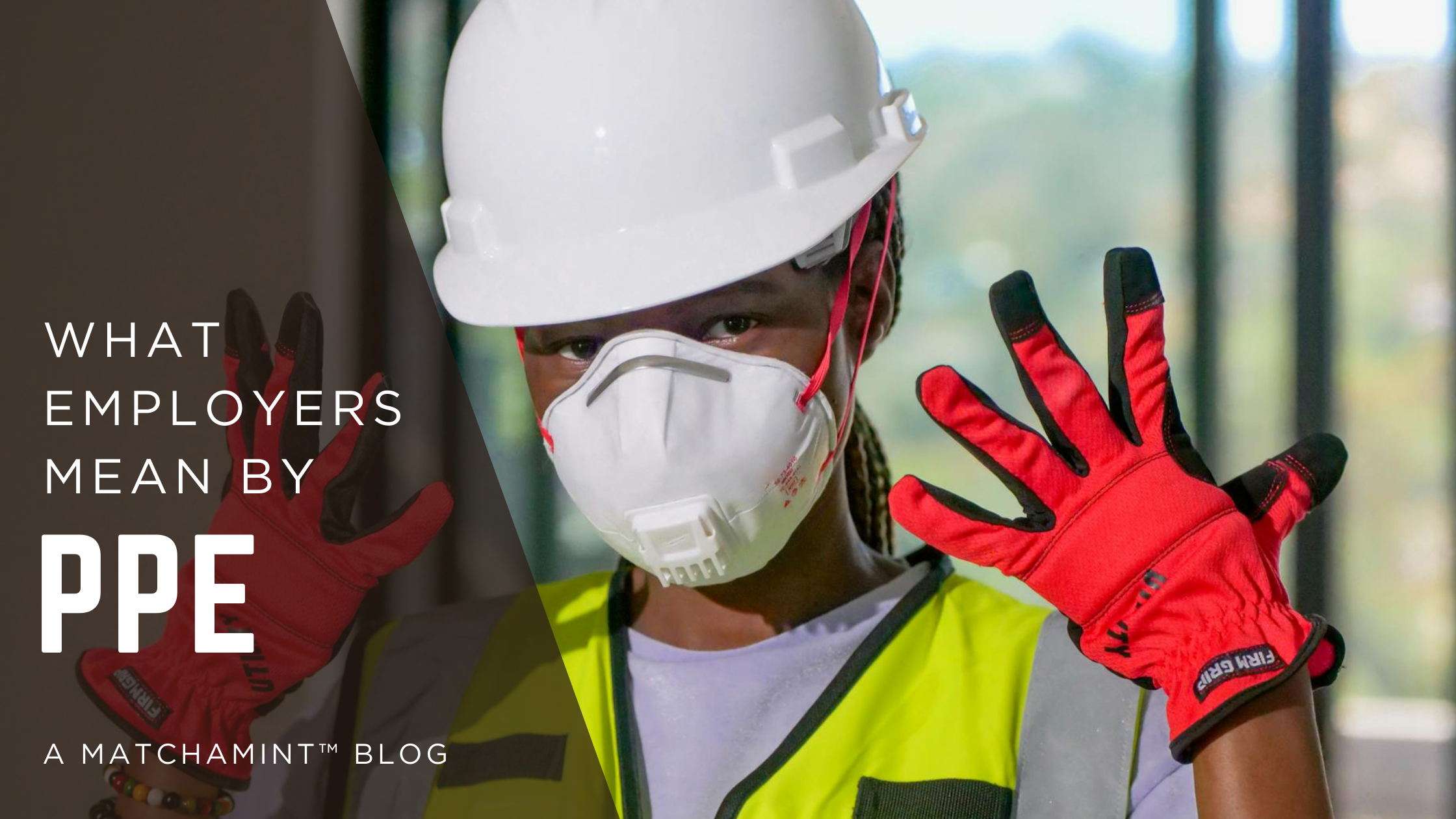
What does that really mean? In other words, PPE is gear that helps protect you while performing hands-on work or protect you from hazards in certain activities such as hunting. It could include items like a hard hat, high-visibility vest, an apron, safety glasses, or chemical-resistant gloves. The exact gear depends on the work, but its purpose remains the same: keeping you safe while performing the essential duties of your job.
Who Provides PPE at Work?
Different jobs come with different risks, which is why PPE requirements aren’t one-size-fits-all. In the U.S., OSHA (the Occupational Safety and Health Administration) sets minimum safety rules across industries.
Specifically, OSHA’s rules are hazard-based. In plain terms, if your job exposes you to a hazard and PPE is required for protection from that hazard, your employer must provide and pay for the equipment. A few specific exceptions outlined in the table below:
PPE that employers generally pay for:
|
PPE that employees may be required to provide:
|
However, keep in mind that OSHA rules are the minimum standard for company-provided equipment. Good employers often provide additional items beyond OSHA minimums, as fewer injuries often mean better crews, improved morale, and higher productivity.
Why PPE Details Matter Before Day One
Since PPE is often the last thing standing between you and a bad day on the job, it’s smart to pay attention to how employers talk about it. For instance, if PPE details aren’t listed in the job posting, it’s fair to ask the employer for details before day one.
At matchAmint, we know questions like this matter. That’s why we make it easier to contact employers directly: so you can ask important questions before you clock in. Stay tuned for more blogs. In our next article, we’ll help you understand pay-related terms that every worker should know. Also, check out our guide on understanding overtime pay and shift differentials.
No responses yet